JULIO CESAR CHAVEZ JR.: THE LEGEND THAT SHOULDN’T BE

Chavez(This piece appeared in FightHype on June 30, 2010)

by Mark Lorenzana

Julio Cesar Chavez Jr., like his father once was, is a boxer. At the young age of 24, Chavez Jr. has already fought a total of 43 fights. He has an impressive ring record of 41 wins, 30 knockouts, zero losses with one draw and one no contest. He has had little amateur background; he fought a total of three amateur fights before deciding to turn pro in September 26, 2003 at age 17. Chavez Jr. won his professional debut, which was fought at super featherweight, by decision against one Jonathan Hernandez.

In 2004, Chavez Jr. fought 11 times, fighting at least once a month except in August of that year. He won all 11 fights, knocking out eight of his opponents and out pointing three. In 2005, his 19-fight winning streak came to a halt when he salvaged a draw against fellow countryman Carlos Molina. After that fight, he once again racked up 17 straight wins before a win over American Troy Rowland was downgraded to a no contest.

Despite his stellar and unblemished record so far, there is no dearth of critics who seem hell bent on making life miserable for the younger Chavez. Some say his impressive record has been padded, that he has been fed a steady supply of club fighters in the course of his career, that he is a spoiled fighter. In his first fight against Matt Vanda, Chavez barely held on for a split decision win to keep his unbeaten record intact. Not a few pundits believed that he won a gift decision. His father, Chavez Sr., insists that his son fought sick in that particular fight and must be given the benefit of the doubt. “I don’t like excuses,” Chavez Sr. said, talking to TV Azteca in a post-fight interview. “But my son made a super-human effort, he fought sick and wanted to cancel the fight. The doctor gave him a shot because he had a fever after the weigh-in.”

Chavez Jr., for his part, didn’t blame any illness for his poor showing. “The people wanted me to score a knockout, but I could not,” Chavez Jr. said after the fight. “The people are very, very discontented with the result, and what can I tell you? What can I tell you as a fighter? Everything is just very sad. Because of the fight, I don’t know what to do. I don’t know what I will do. I need to think about it real hard. I am considering retirement.”

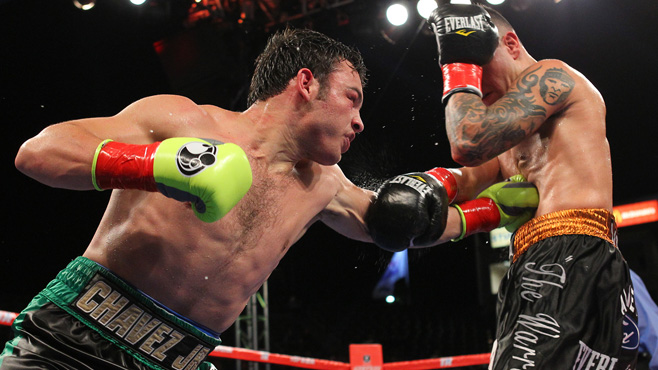
Chavez Jr. did not retire and instead fought Vanda in a rematch, a fight that the former won, and won convincingly. Yet in the run up to the fight against Irish middleweight contender John Duddy several days ago, a lot of experts predicted Chavez Jr. to lose by knockout. A rejuvenated Chavez Jr., with four-time trainer of the year Freddie Roach at the helm, beat Duddy via unanimous decision to earn the vacant WBC Silver middleweight title. In that fight, Chavez Jr. did not gas out in the championship rounds and showed remarkable poise and a huge heart against the dangerous and courageous Duddy.

Despite the hard-fought win, don’t expect the critics to lay off of the younger Chavez.

Chavez Jr.’s greatest challenge does not in fact come in the form of a gloved warrior like himself, standing in the corner of the ring opposite him. His greatest challenge, quite ironically, is trying to deal with the lofty but somewhat unrealistic expectations of people who see in him the second coming of his father.

“La leyenda continua,” the ring announcer blurts out every time Chavez Jr. is introduced in a fight. “The legend continues.”

Julio Cesar Chavez Sr. is in fact, a legend. He retired at age 43 holding a ring record of 107 wins with 86 knockouts, six losses, and two draws. He is one of the greatest fighters of all time. He has won six world titles in three weight divisions: WBC Super Featherweight (1984), WBA Lightweight (1987), WBC Lightweight (1988), WBC Super Lightweight (1989), IBF Light Welterweight (1990), and WBC Super Lightweight (1994). Chavez Sr. also won the Ring Lightweight title in 1988. A list of world champions that Chavez Sr. defeated include Jose Luis Ramírez, Rafael Limón, Rocky Lockridge, Meldrick Taylor, Roger Mayweather, Lonnie Smith, Sammy Fuentes, Héctor “Macho” Camacho, Juan Laporte, Edwin Rosario, Greg Haugen, Tony López, Giovanni Parisi, Joey Gamache, and Frankie Randall.

Chavez Sr. also holds records for most title fights (37), most successful consecutive defenses of most title-fight victories (31), most world titles (27) and most title defenses won by knockout (21). He also holds the longest undefeated streak in boxing history, which is 13 years. The Ring Magazine ranks Chavez Sr. as the 18th greatest fighter of the last 80 years. He was also ranked #50 on Ring Magazine’s list of “100 greatest punchers of all time”. He ranks #24 on ESPN’s 50 Greatest Boxers Of All Time.

Julio Cesar Chavez Jr., like his father once was, is a boxer. And the comparisons, to be fair for both father and son, should end right there.
Floyd is an “exciting” talker, but needs to be a more exciting fighter

Floyd_Baldomir(This piece appeared in 8CountNews on July 22, 2009)

by Mark Lorenzana

Floyd Mayweather Jr. is known for his tactical, defensive style when he fights. He might not be a crowd pleaser in the mold of the late Arturo Gatti or current pound-for-pound king Manny Pacquiao, but you have to give credit where credit is due. The guy is one of the true master practitioners of the Sweet Science.

However, in contrast to his subdued and safety-first attitude inside the ring is his brash, offensive, and loud nature outside of it. Mayweather. is most especially adept at trash talking, and one would be hard put to distinguish between pure theatrics for the purposes of fight promotion and real insulting behavior.

Take Mayweather ‘s latest comment for instance, from a recent Cagewriter report: “In boxing, we know who’s dominating. Black fighters and Hispanic fighters is dominating in this sport. And this is not a racial statement but there’s no white fighters in boxing that’s dominating, so they had to go to something else and start something new.”

Let’s take a look at the current champions in several weight divisions to see if there is any truth to Mayweather’s claim.

In the heavweight division, Ruslan Chagaev and Nikolay Valuev currently share the WBA heavyweight title. Wladimir Klitschko currently holds the IBF, WBO, IBO and Ring Magazine world heavyweight titles. His elder brother, Vitali Klitschko, is the current WBC world heavyweight champion. All four are white. Going down to cruiserweight, we have a couple of white fighters, Tomasz Adamek, the IBF titleholder, as well as Giacobbe Fragomeni, the WBC champion. Over at super middleweight, we have a trio of white boxers, namely WBA super middleweight champion Mikkel Kessler, WBC super middleweight titlist Carl Froch, and IBF super middleweight titleholder Lucian Bute. Felix Sturm and Kelly Pavlik, both white, hold most of the alphabet belts at middleweight. Vyacheslav Senchenko is the current WBA welterweight champion. And, you guessed it, he is white as well.

I’d like to go on and on but I guess I’ve already made my point. Those are already 12 Caucasian boxing champions that I mentioned. So, needless to say, Mayweather’s latest comment about black guys “dominating” boxing is really baseless. Remember, this is the same guy who criticized HBO and their broadcast team in an interview with Grand Rapids Press’ David Mayo last year.

“Even a guy like Jim Lampley, he praises Kelly Pavlik — who has won some good fights, he beat Jermain Taylor twice, we have to give him credit for that — but they talk about Kelly Pavlik, a white fighter, like he’s the second coming or they go crazy over Manny Pacquiao. But I’m a black fighter,” Mayweather. said.

“Is it racial? Absolutely. They praise white fighters, they praise Hispanic fighters, whatever. But black fighters, they never praise. I’ve noticed it for a long time but I couldn’t say anything because I had to do business with them. I’ll still do business with them, but I’m done holding my tongue.”

The HBO team did not praise Pavlik because he is white. They commended him for his fan-friendly fighting style. The HBO people go gaga over Pacquiao not because he is Filipino, but because he fights like there’s no tomorrow. HBO aired an Arturo Gatti tribute not because he was white, and fight fans mourn Gatti’s loss because he was the consummate blood and guts warrior, because of his fights with Micky Ward, and because he ignored pain and physical injury, leaving everything in the ring.

Truth is, maybe Mayweather is just unpopular with boxing fans, especially the casual boxing fans, because he isn’t that exciting to watch.

Ouch.

The truth hurts, but hey, it’s the truth. Mayweather can’t fault the fans if they don’t find him exciting enough. So, as you see, this is not an issue of race at all.

I cover both the MMA and boxing beat for this website and I don’t see a problem at all with both sports coexisting. The last thing we need is negative comments that could fuel hatred and bigotry.

One of my favorite fighters in MMA today is Anderson “The Spider” Silva. He is black. But I wouldn’t have cared any less if he were of another skin color. I really don’t care. I like Silva and respect him irrespective of his race. I follow his fights because I enjoy watching them.

I wish I could say the same thing for Mayweather. I wish I could say that I really enjoy watching his fights.

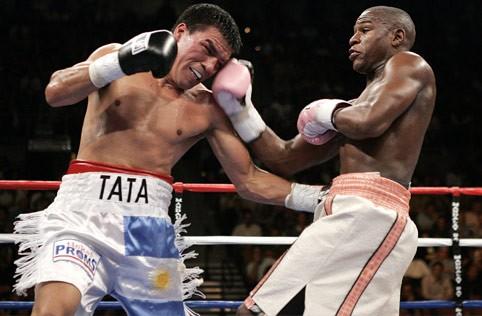
But then I remember his fight against Carlos Baldomir where a lot of fans left the stadium out of boredom long before the final bell rang.

I hope Mayweather does something soon, before it’s too late. I’m sure he wants to be remembered more as an exciting fighter rather than an “exciting” (with emphasis on the quotation marks) talker.

The Same Old Ricky Hatton

Pacquiao_Hatton(This piece appeared in 8CountNews on May 5, 2009)

by Mark Lorenzana

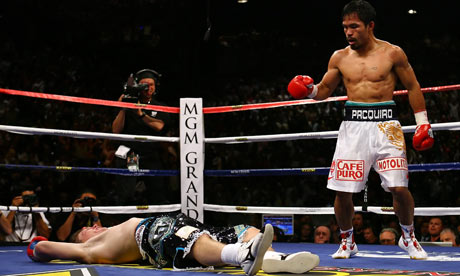
When the left hand that smashed into Ricky Hatton’s jaw finally took out the Hitman and left him in a heap, it wasn’t surprising to see the reactions of the people in the stadium – both Pacquiao and Hatton fans alike. It was a picture of awe, disbelief, and horror, all rolled into one.

Awe and disbelief, because not a lot of people expected Pacquiao to dispose of the supposedly bigger and stronger fighter in such devastating fashion, and in as early as the second round. Horror, because you had to fear for Hatton’s safety as he lay down on the canvas in the center of the ring in a semi-conscious state. I have to add that it was a good thing to see Hatton being able to walk out of the ring on his own.

What surprised me, however, are a couple of things.

First, Pacquiao’s vastly improving boxing skills. It wasn’t a stretch when Freddie Roach stated in the post-fight interview that Pacquiao’s right hand is now much better than his left. It showed in the course of the short fight, where Hatton was repeatedly tagged by right jabs and hooks. In fact, it was a cannonball right hook that knocked down the unsuspecting Hatton for the first time in the fight.

Also, who would have thought that Pacquiao could still pack one-punch knockout power in his fists despite having debuted at 106 pounds?

Pacquiao also showed that now, he isn’t a fighter who relies on offense alone. Hatton soon found out that what stood in front of him was an elusive and fleet-footed gazelle, a far cry from his previous opponents who were stationary targets and who were suckers to his brawling, mauling style and body punches. Pacquiao repeatedly bobbed and weaved, even while dishing out punches of his own. In other words, Hatton didn’t know what to do. He was overwhelmed by a multi-talented pugilist who was once thought as a one-dimensional, left-handed slugger.

Second, I would have thought that Hatton would showcase some of his new-found boxing skills under the tutelage of the self-proclaimed best trainer in the world, Floyd Mayweather Sr. But Hatton didn’t show anything new. He had no head movement, he had no lateral movement. He barreled straight into Pacquiao, hoping to land a power punch that would end the fight. In other words, it was the same old Ricky Hatton. And against Pacquiao, it was recipe for disaster.

To be the best fighter in the world, you have to leave it all in the ring. You just can’t claim that you are one of the best and leave it at that, hoping that people would gobble everything up, hook, line, and sinker.

Needless to say, Pacquiao did his job, and it was a masterful performance at that. He showed without doubt that he is the best pound-for-pound boxer today.

To be the best trainer in the world, you have to command respect. Respect will enable you to sculpt a raw talent and polish him or her into a flawless gem. Freddie Roach is one of the most respectable trainers the boxing world has ever seen, and he has helped make Pacquiao the fighting machine that he is now.

No amount of trash talking, faux poetry and fake posturing will make you the best trainer in the world. You just can’t claim that you are one of the best and leave it at that, hoping that people would gobble everything up, hook, line, and sinker.

It should be a lot more than that.

And that ain’t no joke.

Edwin Valero’s blessing and curse

Edwin Valero(This piece appeared in 8CountNews on April 7, 2009)

by Mark Lorenzana

If there are still any doubts about Edwin Valero’s punching power and what he brings to the table in terms of fistic excitement, then perhaps his two-round demolition of Antonio Pitalua last Saturday night should erase all that.

Sure, Pitalua is not one of the top contenders in the stacked lightweight division. But he is by no means a slouch either. He has a decent professional record, he has been around the fight game for a while, and he is a knockout artist himself.

One would have expected Pitalua, a veteran, to have been more composed. One would have expected Pitalua to execute a game plan against the Venezuelan. Perhaps he could have jabbed more to keep Valero at bay? Maybe he could have used the ring to his advantage and boxed more?

Easy for us to say. We weren’t in the ring with someone whose single punch could send anyone to dreamland in an instant.

For most of the opening round, Pitalua’s body language said it all. He was somewhat tentative, and he seemed tense. He hardly threw a punch. And when Valero unloaded some of his wild swings, Pitalua could not capitalize on the counterpunch. Pitalua managed to connect a few of his shots before the bell sounded, but it hardly meant anything at all. Certainly not to Valero.

Especially since Valero already smelled and sensed fear.

In the second round it was just a matter of time – 49 seconds to be exact. Valero continued to pressure Pitalua, and El Inca hit pay dirt. A cracking right hook from Valero connected to Pitalua’s chin and the Colombian dropped like a sack of potatoes. Pitalua managed to get up but was smothered again by power punches from Valero. Pitalua went down for the second time, and again got up on wobbly legs. A third serving of punches from Valero put Pitalua down for good.

With the win, Valero claimed the WBC lightweight title vacated by pound-for-pound champion Manny Pacquiao.

Valero wants to face more noteworthy opponents. Pacquiao and Ricky Hatton are just a few of the big names that are currently in Valero’s sights.

“If Manny Pacquiao or Hatton give me an opportunity, I would consider moving up and fighting them,” said Valero. “This is the beginning of big things. No man can take my punch.”

And of course, there’s reigning lineal lightweight champion Juan Manuel Marquez.

“Marquez is a little better than any of the others,” said Valero. “If it was up to me, I would want that fight [Marquez], but it is up to [promoters] Bob Arum and Golden Boy to make it happen.”

Bob Arum tends to agree, and is keen on making the fight happen.

“Well, the son of a bitch can really bang, we know,” said Arum just minutes after Valero’s destruction of Pitalua. “Now, I don’t want to give him a long layoff. I want him to get back in action real quick. Any lightweight in the world. I’d like him to fight Marquez, that would be great, anybody, Diaz, Linares. He’ll fight anybody. I think he’s really something special.”

Valero’s statement that no man can take his punch is pretty hard to debate. So far, all 25 of his opponents didn’t manage to hear the final bell. Heck, more than 90 percent of his victims didn’t even reach the third round.

However, Valero’s statement that it could be the start of “big things” for him could still be argued.

Winning a title does not instantly guarantee a big paycheck. To get a bigger purse, you have to dance with the big boys. And there are a couple of things that might hamper Valero’s chances of landing a fight with the bigger names in boxing.

First, Valero is still somewhat of an enigma. His smashing win notwithstanding, Valero’s name doesn’t exactly ring a bell to the casual boxing fan. His last fight in the US prior to last Saturday’s win in Texas was six years ago when he knocked out unheralded Tomas Zambrano in one round. A fractured skull and blood clot suffered due to a motorcycle accident in the amateur ranks and a subsequent failed MRI in 2004 have hampered Valero from fighting in the US. That’s why he has been forced to ply his trade outside the US, mostly in Japan, in Venezuela, and in other countries. Valero has only been recently cleared to box in the state of Texas, and so far other states have yet to follow suit. This has contributed much to Valero’s relative obscurity. Realistically speaking, big names sell lots of tickets. Practically speaking, big names want to fight other big names.

Second, believe it or not, is Valero’s punching power. He packs one-punch knockout power in both fists, a rarity in the lower weight classes. So it might be a bit difficult to find a big-named fighter out there who would be willing to step up to the plate against a murderous puncher with a lot of pop, especially someone who does not bring in as much money to the table.

There is no doubt that Edwin Valero brings heaps of excitement in every fight. There is no doubt that El Inca is supremely talented in terms of raw punching power.

It is just a shame that his talent, his blessing, might prove to be his curse as well.

Mosley Strips off Margarito’s Air of Invincibility

Margarito-Mosley(This piece appeared in 8CountNews on January 27, 2009)

by Mark Lorenzana

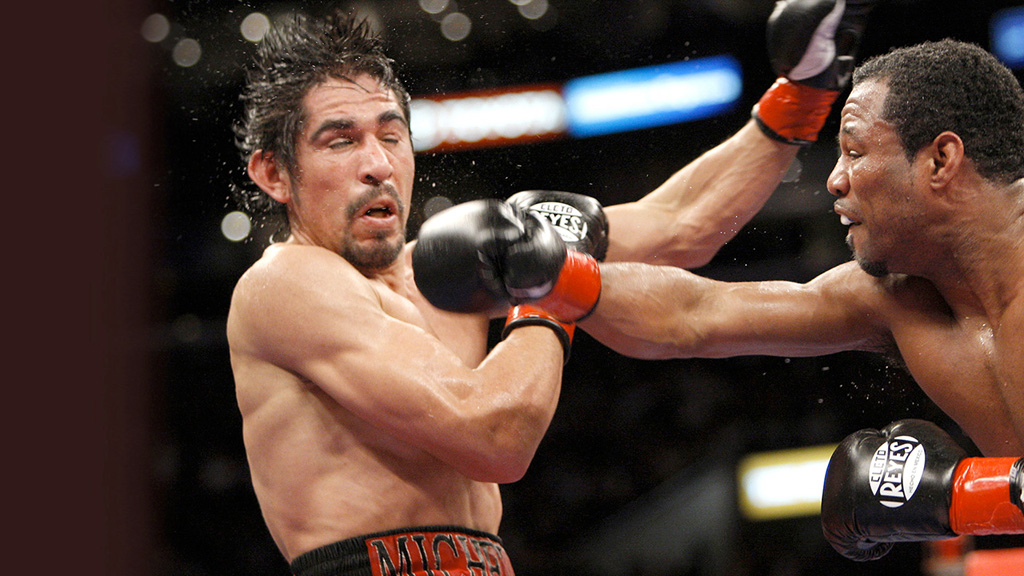
It’s already been a few days since Shane Mosley’s one-sided beat down of the supposedly resilient, durable, and granite-chinned Antonio Margarito but the aftermath has left boxing fans and pundits alike abuzz and asking the same question: What happened?

For those who didn’t give the 4-1 underdog Mosley a sliver of a chance against Margarito, the result still seems to be a paradox. And for good reason. At the very least– in Mosley’s last fight prior to Margarito – although he gamely dispatched perennial cannon fodder Ricardo Mayorga with one second left in the final round, it wasn’t exactly a cakewalk for Sugar. The hittable and predictable Mayorga, a self-confessed cigarette smoker even while on training, gave Mosley all he could handle in the course of the fight. In fact, entering the 12th round, Mayorga had a one-point lead in one of the judges’ scorecards.

At the very most, Margarito looked absolutely stellar, nay, invincible, when he demolished Miguel Cotto last July 2008. Cotto fought an almost perfect fight– using combinations in the early rounds and frequently landing, while utilizing superb footwork to avoid danger. But Margarito seemed to shrug off Cotto’s best shots– add to this the Tijuana Tornado’s constant offensive pressure—and the onslaught proved too much to handle for Cotto. The end came in the eleventh round as Cotto wilted under a barrage of punches.

So, based on the aforementioned instances, to say that it was a surprise that Mosley dismantled Margarito the way he did, is a severe understatement.

Since the beginning of the first round, it was clear that Margarito wouldn’t be able to smother Mosley with his relentless pressure. True, Margarito is a slow starter and he picks up his game in the middle rounds. But in this fight, Mosley’s hand speed showed from the outset and Margarito seemed flustered, getting trapped a few times against the ropes without any answer for Mosley’s attacks.

From the second round until the middle rounds, it was clear that Margarito had bitten off more than he could chew. Mosley kept pumping the jab, throwing lightning combinations, and kept hitting Margarito with his overhand right. Sure, it was Margarito who kept on pressing forward to take the fight to Mosley. Sure it was Margarito who was the aggressor. But it was also Margarito who frequently got tagged with shots to the face. And body. One could also notice that Margarito’s timing was off, and he was just a few punches too late; he couldn’t retaliate and he was being overwhelmed by the human dynamo that was Shane Mosley.

By the later rounds, the severe beating that Mosley dished off took its toll on Margarito. The fighter that had once shrugged off Miguel Cotto’s best shots had visibly slowed down, and his punches didn’t have enough sting anymore to hurt Mosley. Margarito didn’t seem to have his legs anymore. In the eighth round, a Mosley left hook staggered Margarito and drove him to the ropes. Mosley followed up with a barrage of punches and dropped Margarito. Margarito managed to get up at the count of nine and staggered toward his corner. The temporary respite came to an end for Margarito 43 seconds into the ninth round, after a blitzkrieg courtesy of Mosley prompted the referee to stop the fight. Margarito’s corner threw in the towel almost simultaneous with the stoppage.

So what happened?

First off, before trying to answer that question, let’s try to get a couple of issues out of the way. Before the fight, it was reported that Margarito had to re-wrap his hands several times because Mosley’s camp found out that Margarito had tried to wrap his hands illegally. There is also some talk that Margarito had

some weight problems prior to the fight and might have drained himself making weight. Did Antonio Margarito’s camp try to gain undue advantage by using illegal hand wraps on purpose? Is there any truth to the unverified reports that Margarito was weight-drained, thus affecting his stamina and performance? The first question can only be answered by a proper investigation and in the case of the second, we could only speculate; best to take in all the talks with a grain of salt.

The point is, trying to pass off the hand-wrap fiasco as something that might have affected Margarito’s concentration and trying to use the weight-drain issue as an excuse is just plainly taking away all the hard work that Mosley put in. It is plainly taking away a legendary and dazzling performance showcased by the brilliant Sugar Shane Mosley.

But to go back. What really happened?

What happened — as thousands of spectators at the Staples Center and millions of viewers around the world witnessed – was Margarito getting schooled by the savvy veteran. What happened was Mosley’s team formulating a game plan and their fighter following it to the hilt. What happened was Margarito painfully learning the old boxing adage that speed kills. What happened was Mosley turning back Father Time and giving a performance for the ages, something that will be talked about for years to come.

To put it simply, Sugar Shane Mosley effectively stripped off Antonio Margarito’s air of invincibility. And he did that by chipping away at Margarito’s granite chin one punch at a time, one round at a time for nine agonizing (for Margarito) and spectacular (for Mosley) rounds.

Nothing could be more convincing than that.